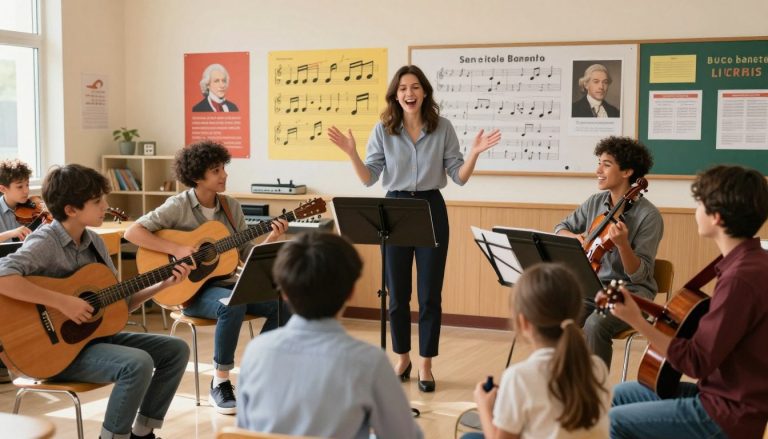
Why should schools invest in music education? Research shows it boosts reading and language skills. It also sharpens attention and raises graduation and college rates.
Studies like the Harmony Project show music study improves the brain. It enhances auditory encoding, working memory, and noise resilience. These benefits lead to better SAT scores and classroom focus.
Music education also improves social and behavioral skills. It increases teamwork, confidence, and lowers dropout risk. These advantages make a strong case for funding and policy support.
Key Notes;
- Music training produces measurable neural and language gains after months of instruction.
- Participation links to higher graduation rates and better college access in programs like Harmony Project.
- Students in music show improved attention, memory, and standardized-test performance.
- School music builds teamwork, confidence, and reduces disengagement.
- Investing in music yields long-term academic and community returns.
why should schools invest in music education
Schools have to decide if they should spend money on music classes. This choice affects many people, like budget planners and parents. Talking about the benefits helps make the decision clearer.
Overview of the primary question and keywords
Supporting music education is important for schools. It’s about more than just music. It’s about how it helps students in school and life.
How the question frames policy, funding, and curriculum choices
Deciding on music education involves looking at costs and benefits. Schools use evidence to guide their choices. Music is linked to better grades and college plans.
Preview of evidence-based arguments (neuroscience, program outcomes, societal benefits)
Music changes how our brains work. It helps with focus and memory. It also helps students do better in school and feel more connected.
| Decision Factor | What Administrators Ask | Relevant Evidence |
|---|---|---|
| Cost | How much for instruments, staff, and space? | Per-student program budgets vs. district outcomes from pilot programs and grant-funded models |
| Academic Return | Do students show gains in reading, math, and test scores? | Controlled studies linking music instruction to improved language processing, attention, and standardized-test skills |
| Equity Impact | Does the program reach underserved students? | Case studies showing expanded access, higher graduation rates, and scholarship pathways |
| Community Value | Does music build school climate and civic engagement? | Surveys and attendance data indicating increased participation and lower disciplinary incidents |
| Long-term Benefits | Are there sustained cognitive or career effects? | Longitudinal research linking early music study to lifelong cognitive resilience and creative careers |
Academic benefits of music education and impact on academic performance
Music in schools boosts literacy, verbal skills, and test scores. Research by Moreno and colleagues shows music lessons help kids read faster. Studies by Nina Kraus and team show music improves listening and learning skills.
Research linking music study to improved reading, language, and SAT results
Studies show music training helps with reading and language. It boosts phonological processing and verbal memory. Music students often get better SAT scores, up to +63 in verbal and +44 in math.
Studies showing higher graduation rates and college matriculation among music students
The Harmony Project shows music lessons lead to better grades and college. After two years, students showed neural and behavioral gains. They had higher graduation rates and went to college more.
How music instruction supports standardized-test related skills without replacing core academic instruction
Music improves attention, working memory, and listening skills. These skills help with math and reading on tests. Schools can add music to help with tests without losing focus on core subjects.
| Academic Area | Measured Benefit | Representative Evidence |
|---|---|---|
| Reading and Phonological Awareness | Improved decoding, faster gains in early literacy | Moreno et al., randomized trials showing reading-related gains |
| Language and Verbal IQ | Stronger vocabulary and verbal reasoning | Royal Conservatory summaries; longitudinal cohort analyses |
| Standardized Test Performance | Higher average SAT scores among music participants | Secondary analyses of national datasets; program follow-ups |
| Graduation and College Matriculation | Increased graduation rates, scholarships, college entry | Harmony Project outcomes; Kraus et al. neural-behavioral findings |
| Cross-domain Skills | Better attention, working memory, classroom focus | Auditory processing studies and randomized instruction trials |
Adding music education in schools boosts learning without taking away from core subjects. It helps students do better in school and grow creatively.
Cognitive and neuroplasticity effects of music training
Neuroscience shows that music lessons change the brain in big ways. Studies by Nina Kraus and others show better hearing and memory in musicians. This helps explain how music boosts learning.
Studies prove that music training changes the brain for good. Moreno’s work showed music boosts smart thinking and planning skills fast. Schools like Harmony Project and Chicago Public Schools see big gains in listening skills after two years.
Practice is key. Quick gains can happen, but lasting changes take months or years. This means schools should keep music programs going for lasting benefits.
Music benefits people of all ages. Lifelong musicians keep their brains sharp, even as they get older. This shows music’s power to keep minds strong over time.
Schools should invest in music. It improves listening, memory, and focus. This helps students do better in school. When deciding on programs, remember how music helps students learn.
Social and emotional learning advantages from school music programs
School music programs do more than teach notes. They help students learn to work together, understand others, and share goals. This changes how they interact every day in school.
How ensemble work fosters teamwork, empathy, and social cohesion
Being in an ensemble teaches students to listen well, adjust, and follow directions. These skills help them understand others and respect each other.
Music programs that focus on group work create special moments. Concerts, rehearsals, and warm-ups bring students together. This makes school feel like a community and helps students stay in school.
Music’s role in building confidence, responsible risk-taking, and public performance coping skills
Getting ready for performances teaches students about setting goals and the value of hard work. They learn to handle nerves, accept feedback, and take smart risks in front of others.
Doing performances over and over can make students feel more confident. It helps them grow creatively without forgetting their schoolwork.
Emotional regulation, stress reduction, and increased emotional intelligence among students
Playing and listening to music can calm students down and give them a safe way to express feelings. Teachers see students using music to deal with anxiety before big tests or speeches.
These music habits are linked to emotional smarts in schools. When students talk about their feelings and experiences, music helps them grow. It boosts their self-awareness and skills for getting along with others.
In the end, music education does more than teach music. It helps students grow personally and emotionally. This supports their success in school and life.
Development of discipline, executive function, and transferable skills
Daily music practice builds habits for school life. Short, focused sessions teach time management and goal-setting. Students learn to break big goals into small steps and track their progress.
Practice routines encourage perseverance. Repeating scales, etudes, and repertoire trains attention and patience. Over time, this discipline becomes an automatic study habit.
Research links music lessons to gains in planning and working memory. Studies from the Royal Conservatory and academic labs show a strong connection between executive function and music. Students who study music tend to show stronger sustained attention and better task switching in classroom tasks.
These gains support everyday schoolwork. Improved working memory helps with multi-step math problems. Better cognitive flexibility aids reading comprehension by shifting between ideas and themes.
Transferable benefits of music education appear in measurable academic skills. Music’s focus on rhythm, pattern, and structure parallels skills used in math and literacy. Phonological awareness and pattern recognition from music practice support decoding and verbal fluency.
Long-term engagement creates durable study habits. Students committed to instrument study internalize deliberate practice and resilience. These habits contribute to persistence on challenging assignments and to higher rates of graduation and college entry among sustained program participants.
Administrators can frame programs as skill-development platforms. The advantages of music education for students include clear returns in behavior, classroom readiness, and academic skill transfer. Framing music this way helps justify funding and curriculum time.
| Skill Area | Classroom Benefit | Example from Music Training |
|---|---|---|
| Time Management | Completes homework on schedule | Daily practice logs and rehearsal schedules |
| Working Memory | Solves multi-step math problems | Memorizing passages and complex scores |
| Task Switching | Shifts between subjects with less disruption | Moving between technical study and repertoire |
| Pattern Recognition | Improves reading comprehension and decoding | Identifying rhythmic and melodic patterns |
| Perseverance | Stays on long-term projects | Working toward recitals, exams, or ensemble auditions |
Creativity, spatial reasoning, and preparation for the creative economy
Music education changes how students think. It makes their brains better at moving between thinking and imagining. Schools that value music help students solve problems in many ways.
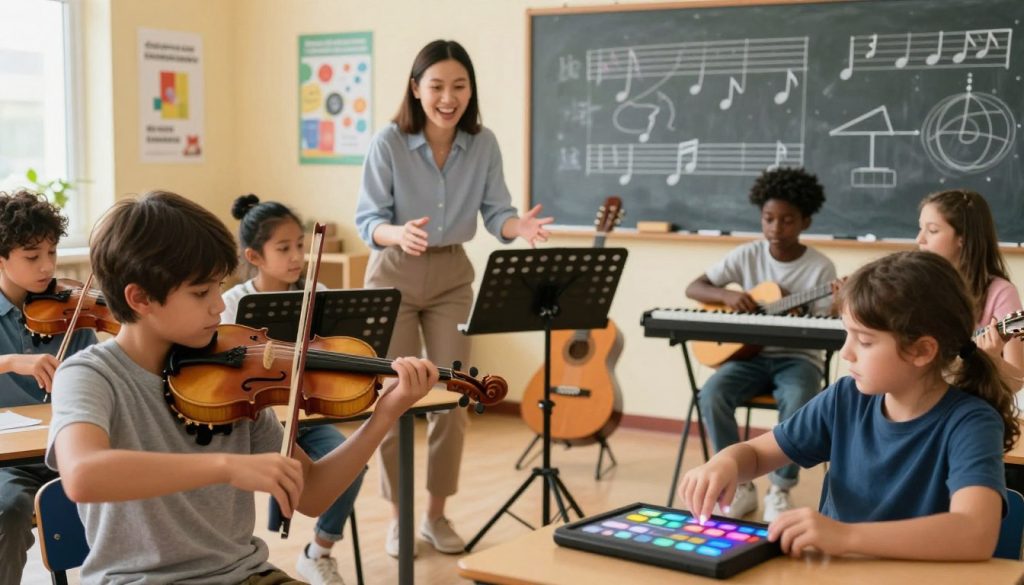
How music training enhances inter-hemispheric connectivity and creative thinking
Studies from places like the Royal Conservatory show music training makes brains better. It helps students mix seeing patterns with coming up with new ideas. This makes them think more creatively.
Spatial intelligence gains and their relevance to STEM learning
Research shows music lessons improve spatial skills. These skills help with geometry, engineering, and more. Teachers can use music to teach STEM subjects in a fun way.
Preparing students for 21st-century careers and growth in creative-sector jobs
Arts graduates are in demand because they’re creative and can work well with others. Seeing music as a way to prepare for the future is smart. It helps students learn skills like managing projects and solving problems.
Designing music programs as an investment in the future is wise. When we see music as a way to prepare for work, we make better choices. This way, we meet both economic and educational needs.
Equity, access, and community impact of funded music programs
Good music programs help students who can’t afford private lessons. Schools that spend on music gear and teachers make learning easier. This shows how music funding helps students in many ways.
Harmony Project case study
Harmony Project started in Los Angeles in 2001. It gives free music lessons to students who keep up their grades. Studies show that kids who play music for two years do better in school and with their hearing.
Why funding narrows opportunity gaps
Free or cheap music lessons help level the playing field. Arts programs offer mentorship and chances to perform. This is why we should support music in schools to help everyone.
Community benefits and long-term returns
Music programs are safe places for kids after school. They also bring families together. This leads to better grades and more scholarships, making a big difference in the community.
Funding works when it shows real results. By sharing how music helps, we get more support for music programs.
| Area of Impact | What Funded Programs Provide | Typical Outcome |
|---|---|---|
| Access | Instruments, lessons, scholarships | More students from all income levels |
| Academic Support | Academic incentives, tutoring ties, practice requirements | Better attendance and more graduates |
| Neurocognitive Gains | Regular, multi-year instruction | Better hearing and language skills |
| Community Engagement | Family concerts, volunteer networks, safe after-school spaces | More family involvement and local support |
| Funding Leverage | Outcome data for grant proposals and district budgets | More private and public funding |
Practical advantages for schools: retention, engagement, and school climate
Schools with music programs see better student engagement and retention. Music classes make learning fun and hands-on. This keeps students interested and active in school.
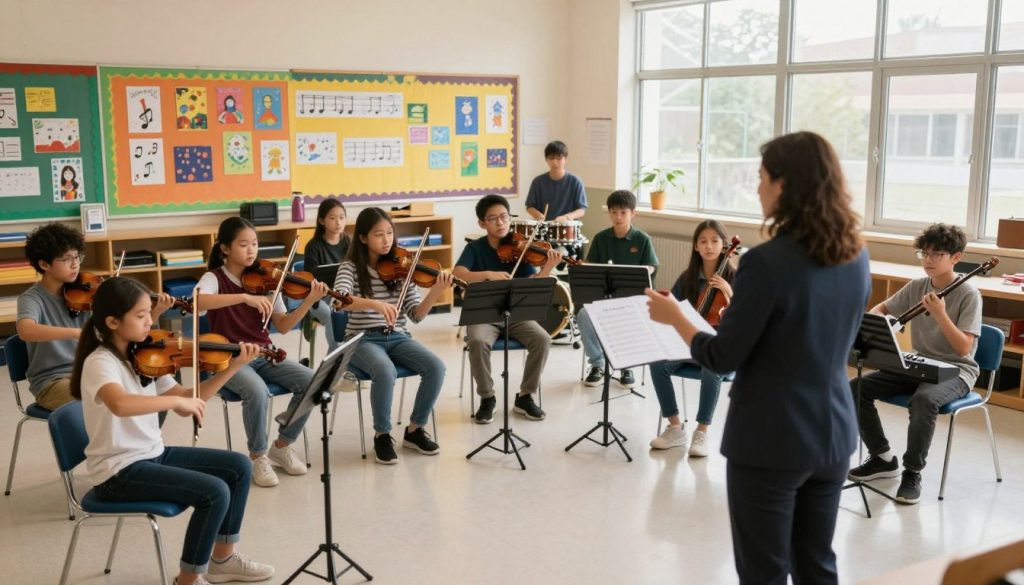
How music classes increase student engagement and lower attrition
Music classes give students a reason to come to school. They feel a sense of purpose. Programs like the Harmony Project show music helps keep students in school.
Effects on school culture: pride, attendance, and extracurricular involvement
Concerts and recitals boost school pride. They bring students, families, and staff closer together. Students who do arts earn more attendance awards.
Being in extracurricular activities helps students make friends and find mentors. This improves the school’s overall atmosphere.
Cost-benefit perspective for administrators when comparing program costs to outcomes
Admins look at costs like instruments and teacher salaries. They compare these to benefits like better reading scores and graduation rates. Music programs can save money by improving attendance and reducing the need for extra help.
Starting small with pilot programs can help. Working with local music groups can also lower costs. This makes a strong case for music in schools, showing its value beyond just education.
Designing sustainable music programs and arguments for funding
Start with a clear plan that puts music in the school day, not just after hours. A sequential curriculum, regular rehearsals, and reliable instrument access are key. These steps help make music programs sustainable for schools.
Best practices include hiring certified music teachers and providing ongoing training. Mix ensemble rehearsals with individual lessons and classroom reflection to improve social-emotional learning. Work with classroom teachers to make music activities support literacy and math goals.
Fundraising should mix public dollars with grants and partnerships. Use district funds, Title I, or ESSER when allowed. Also, seek funding from the National Endowment for the Arts and state arts councils. Local music groups, nonprofits, and companies can help with teachers, instruments, or grants.
Think about booster clubs and foundations for growing your program. Studies like Harmony Project show how student gains attract support. These examples help when talking to school boards and donors.
Track important metrics like GPA, reading and math scores, and attendance. Also, look at retention, graduation rates, and college attendance. Include behavioral incidents and program participation to show broader benefits.
Use a mix of numbers and short testimonials from teachers and families. Early successes in attendance and engagement help secure more funding. A clear budget and growth plan show what to expect.
Plan for instrument upkeep, staff training, and community involvement from the start. Gradual growth shows steady progress. With good data and funding, you can make a strong case for music education.
houghtful implementation makes these benefits available to all students.
Conclusion
Studies by Nina Kraus and Sylvain Moreno show music education’s benefits. They found it improves listening, language, and focus. This proves why schools should invest in music.
Music education also boosts social and emotional growth. It helps students work together and manage time. Schools see better attendance and a positive atmosphere because of it.
For schools, music education is a smart choice. It helps students succeed in school and beyond. By funding music programs, schools can help all students thrive.
FAQ
Why is music education important in schools?
Music helps develop important skills like phonological awareness and working memory. Studies by Nina Kraus and Patricia K. Kuhl show music training improves reading and language skills. Schools benefit when music is part of the day.
What are the benefits of music education in schools?
Music education offers many benefits. Students in music programs often do better in reading and language. They also have stronger executive function and higher graduation rates. Programs like the Harmony Project show music can improve both musical and school skills.
Why is music so important in schools?
Music engages many brain networks at once. This boosts brain flexibility for other learning areas. Music combines auditory, motor, emotional, and social demands. It strengthens skills needed for classroom subjects, making it a powerful educational tool.
How is music education beneficial?
The benefits of music education depend on the quality and length of the program. Short programs can quickly improve attention and speech. Longer programs lead to lasting changes in cognition and school performance. Programs with regular practice, qualified teachers, and academic focus show the most benefits.
- Academic: better reading, language, and test skills.
- Cognitive: improved auditory processing, working memory, and attention.
- Social-emotional: confidence, teamwork, and emotional control.
- Practical: discipline, time management, and persistence.
- Community: equity of access, safe after-school spaces, and college paths.
For school leaders, a well-designed music program offers many benefits. It provides academic support, improves school climate, and has community impact.