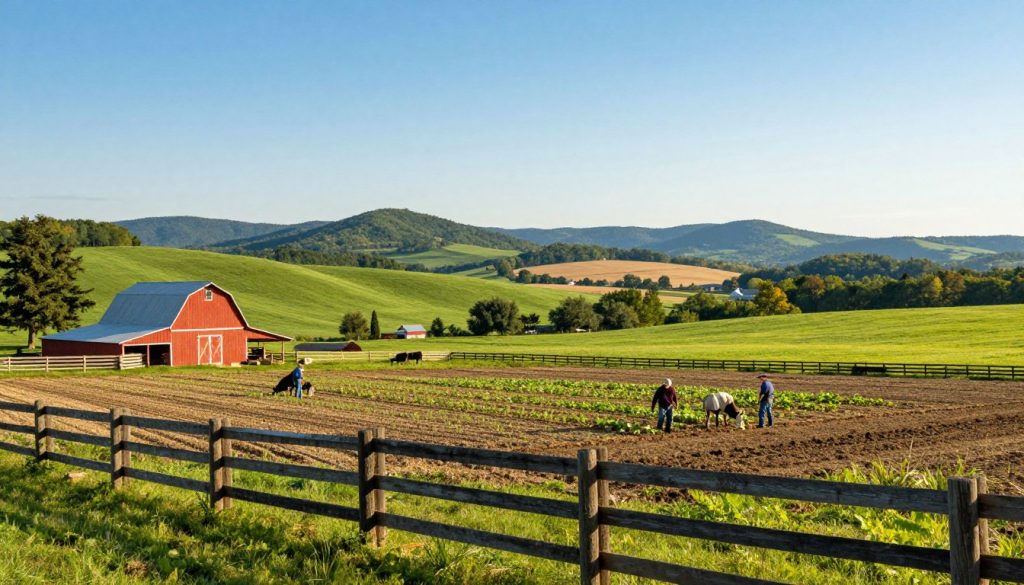
Pennsylvania is a leader in preserving farmland for farming. This makes it a great choice for investors looking for lasting value and to help the community.
The Pennsylvania Agricultural Conservation Easement Purchase Program started in 1988. The first easement was bought in December 1989. Today, the state has protected over 6,597 farms and more than 656,000 acres.
This effort helps ensure we have food for the future. It also supports an agricultural economy that adds about $132.5 billion and nearly 600,000 jobs.
This section explores how investing in Pennsylvania’s agriculture works. It shows why it can be stable, offer tax benefits, and create partnerships. But, it also talks about the downsides, like less flexibility in selling under easements.
Key Notes;
- Pennsylvania has preserved thousands of farms and hundreds of thousands of acres through long-running state programs.
- Pennsylvania farmland preservation investments blend public funding, county matches, and nonprofit partnerships for durable outcomes.
- Agricultural land conservation can provide tax advantages and steady income but may limit resale appreciation under easements.
- Investing in pennsylvania agriculture requires due diligence on zoning, easement terms, and stewardship obligations.
- These rural investment opportunities support local economies and protect food security, making them relevant to impact and institutional investors.
Overview of Pennsylvania farmland preservation investments
Pennsylvania works hard to keep farmland for farming. They buy easements to keep land for crops and animals. This helps food supply, farm incomes, and keeps rural areas beautiful.
Investors and communities look at these goals. They see the risks and benefits of saving farmland.
What these programs are and their goals
Farmland programs buy easements to stop nonfarm use. This keeps land for farming. They want to keep farms going, stop sprawl, and keep local food.
Clear goals help match public and private efforts. This makes sure farmland stays protected.
Historic scope and scale of efforts
The program started in 1988 and first protected land in 1989. Pennsylvania has saved thousands of farms and hundreds of thousands of acres. Now, over 6,600 farms and 656,000+ acres are protected.
This shows a strong commitment to saving farmland.
Partnership model: state, county, and nonprofit roles
Pennsylvania uses partnerships for funding and work. The state and local governments lead. Nonprofits help with outreach and funding.
Programs like the Agricultural Conservation Assistance Program work together. Land trusts help farmers and government. This model strengthens farmland protection and encourages investors to think about stewardship.
How the Pennsylvania Agricultural Conservation Easement Purchase Program works
The Pennsylvania Agricultural Conservation Easement Purchase Program buys permanent easements from farmers. This keeps land in agriculture and limits development. It’s key for owners thinking about long-term land investing and tax incentives.
The program started in 1988 and made its first deal in December 1989. State and county efforts have protected thousands of parcels. Annual reports and maps help investors and landowners.
How conservation easements limit development
A conservation easement is a deed restriction that stays with the land. It spells out what can’t be done, like building houses or commercial buildings. It keeps the land for farming, like growing crops or raising animals.
Deeds of easement and plans explain how the land will be watched. This affects how much the land is worth and if it can be sold or financed.
Program timeline, approvals, and results
State records show steady progress over decades. More than 6,600 farms and about 650,000 acres are preserved. Now, 6,597 farms and about 656,000 acres are protected.
Boards approve funding for groups of farms. For example, $8.8 million was given to protect 2,017 acres on 33 farms. This gives investors clear numbers to plan with.
Application and approval process at state and county levels
Farmers start with their county agricultural preservation boards. Counties check if they qualify and rank projects. The top projects then go to the Pennsylvania Agricultural Land Preservation Board for final approval.
County roles include ranking and local funds. State roles include funding and keeping maps and reports. Knowing these steps helps with long-term land investing or tax incentives.
| Step | Responsible Entity | Typical Timeline | Impact on Investors |
|---|---|---|---|
| Application submission | County agricultural preservation board | Variable; often annual or semiannual cycles | Starts formal review; triggers eligibility checks |
| County ranking | County board with local criteria | One to three months after submission | Determines likelihood of state funding |
| State review and funding decision | Pennsylvania Agricultural Land Preservation Board | Several weeks to months depending on funding | Finalizes easement terms; affects resale and financing |
| Easement recording and stewardship setup | County recorder and program staff | Weeks after approval | Establishes long-term monitoring obligations |
| Monitoring and enforcement | County or land trust partners | Ongoing, annual or periodic visits | Ensures compliance; informs valuation over time |
Funding structures and government involvement in farmland preservation
State and local governments play a big role in funding farmland preservation. The Pennsylvania Department of Agriculture and the Agricultural Land Preservation Board manage money each year. They also decide which farms to help.
The Shapiro administration has added $8.8 million to protect 2,017 acres on 33 farms. They have also dedicated about $134 million to safeguard 448 farms covering 37,194 acres.
Counties often match state funds and help choose which farms to help. Nonprofits also join in, providing technical help and sometimes money. This teamwork makes state money go further.
Grant programs help with more than just buying easements. The Agricultural Conservation Assistance Program (ACAP) has helped over 2,000 farmers. They use this help to improve soil and water health on preserved land.
There are plans for more grants, including $13 million for agricultural innovation. Other funds will support market access, diagnostics, and food purchases.
Together, public funds, county matches, nonprofit help, and grants create a strong funding model. This model helps farmers and supports long-term care of the land. It also makes it easier for everyone to understand and track conservation efforts.
Types of private and institutional investment opportunities tied to farmland preservation
The market for preserved farmland attracts investors looking for steady returns and helping the environment. They can buy land outright or partner with nonprofits. They also use creative financing for rural deals.
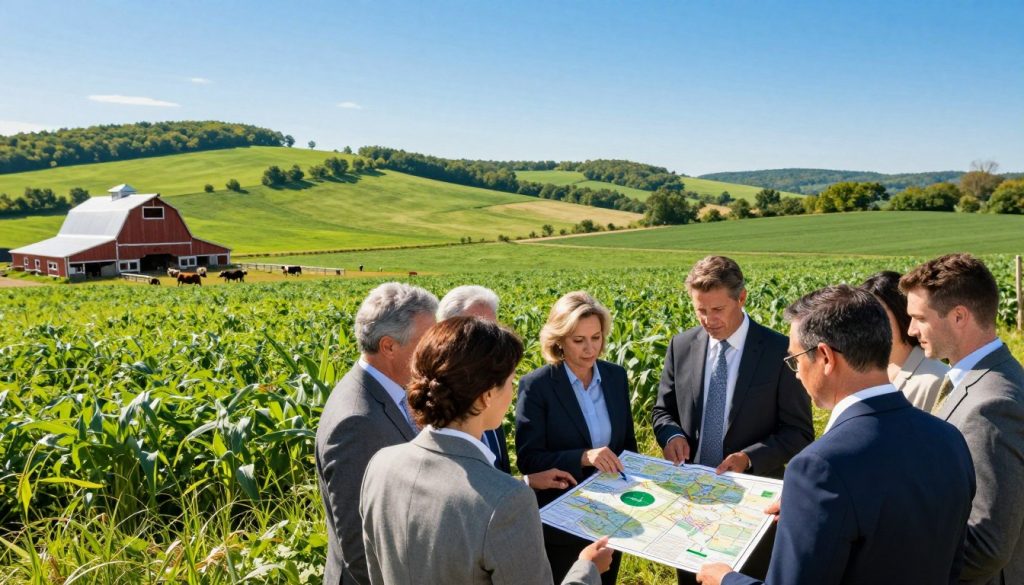
Direct farmland purchase lets investors buy land to lease or farm themselves. They can also put conservation easements on it. This limits development but keeps the land productive. Financing often comes from mortgages or land loans.
Seller financing is common when banks are hesitant about easement-encumbered land. It helps bridge financing gaps.
Agriculture investment funds combine money from big investors and family offices. They buy farms or land with easements. These funds focus on long-term value and sustainable food systems.
Income comes from leases and farming contracts. They also have value-added businesses that support conservation goals.
Working with land trusts makes the easement process easier. Nonprofits help with monitoring and structuring deals. This way, investors and conservation goals align.
Seller financing offers flexible payment plans. It’s useful when banks are strict about preserved land. Investors should understand the limited resale value and loan terms before investing.
Impact investors mix private money with public grants and help. Programs like ACAP fund improvements and boost farm productivity. This mix strengthens financial returns and conservation efforts.
Doing thorough research is key. Check the easement details, stewardship duties, lease terms, and lender approval. Compare different investment options to find the best fit for your goals and risk level.
Eligibility requirements and easement terms investors should know
Investors looking at preserved farmland need to know the main rules. Programs focus on farms that are actively working the land. They look for good soil, enough land, and being part of Agricultural Security Areas.
County boards check these things before the state does. They make sure the farm fits local goals.
Being in an Agricultural Security Area helps a lot. It shows the farm is recognized locally. This can help protect the farm from unwanted changes.
Investors should check if a farm is in an ASA. This avoids surprises later on.
Easements have rules to keep the farm as a farm. They stop non-farm uses like building houses or starting businesses. But, they allow some farm buildings and might let people visit.
Easements are on the farm’s title. This means they affect loans and selling the farm. Buyers need to check the title and do environmental tests. Lenders and insurance companies look at the deed closely.
The person with the easement has to take care of it. This includes checking on the farm and making sure rules are followed. Programs might ask for money to keep this up over time.
| Topic | What to check | Why it matters |
|---|---|---|
| Eligibility criteria | Active agricultural use, soil class, parcel size, ASA enrollment | Determines acceptance for easement purchase and farmland preservation eligibility |
| Deed language | Permitted uses, prohibited activities, term (perpetual) | Shapes income, financing, and future transferability |
| Easement restrictions | Subdivision bans, limits on non-ag uses, building allowances | Protects farm character and defines limits |
| Monitoring plan | Baseline report, inspection schedule, reporting duties | Ensures compliance and documents changes |
| Stewardship obligations | Who monitors, funding for enforcement, dispute resolution | Secures long-term protection and reduces liability |
| Due diligence | Title search, environmental review, lender approvals | Reveals encumbrances that affect financing and value |
For more information, contact the Bureau of Farmland Preservation. They can explain how to apply, timelines, and recent updates. Doing your homework before buying helps match your goals with the rules of preserved land.
Potential financial returns and economic considerations for investors

Investors looking at preserved farmland need to think about steady income and limited gains. Farmland can bring in money from rents, farm profits, and other on-site businesses. Leasing is popular for those who want regular income without the daily work.
Leasing, operations, and enterprises
Leasing can give you yearly income based on crops or a fixed rate. Running the farm yourself can increase earnings. You can also make money from agritourism or renewable energy, if allowed.
Appreciation and resale dynamics
Land with easements might not be as valuable to non-farm buyers. It might not go up in value as fast as other land. But, it could cost less to buy and have lower taxes. Investors should focus on the cash flow, not just the value going up.
Costs, grants, and return drivers
Expected returns must cover costs like loans, fees, and upkeep. Grants can help with the costs. Tax rules for easements also affect how much you make.
Community effects and market stability
Keeping farmland helps local jobs and businesses. It keeps the market stable by supporting farmers and suppliers. This helps keep rents steady and tenants in place.
Investor checklist
- Identify probable farmland income streams and their volatility.
- Estimate impact of restricted rural land value on resale timing and price.
- Include stewardship and monitoring costs in cash flow models.
- Assess available grants and tax offsets that improve returns.
- Model scenarios with and without permitted enterprise activities.
| Return Component | Typical Range | Key Risk or Modifier |
|---|---|---|
| Leasing farmland (passive rent) | 2%–6% annual yield | Crop price swings, tenant credit, lease terms |
| Direct farm operations | Varies widely; low to high depending on enterprise | Operational risk, labor, weather |
| Value-added enterprises | Higher margin | Regulatory limits, easement restrictions |
| Capital appreciation (easement land) | Low to moderate | Appreciation easement land faces resale constraints |
| Tax and grant offsets | Variable; can be significant | Program eligibility, application success |
Tax incentives, credits, and other fiscal benefits of preservation investments
Keeping farmland can change how much taxes you pay. You might get to deduct a lot from your taxes. This can also help lower estate taxes if done right.
Conservation easement tax incentives depend on a few things. These include the land’s value, who donated it, and following IRS rules. You need to prove the land’s value and write a deed that meets rules.
In Pennsylvania, there are special programs that affect taxes. Clean and Green lowers property taxes for farms. The Beginning Farmer Realty Transfer Tax Exemption helps new farmers.
Other states have their own programs too. But they work differently. Clean and Green is applied by each county. So, check the rules in your area to save money.
There are indirect tax benefits too. Grants can help pay for conservation work. This can make your land more profitable after taxes.
Taxes affect how much money you keep and your estate planning. Giving up an easement can lower your taxes but also limit future gains. Buying land with an easement might lower its value.
Planners must think about taxes and how they affect your family. Giving land to heirs can make things simpler. But it might limit how they can use the land or sell it.
Before making a move, get advice from a CPA and appraiser. They can help you understand the tax benefits. This way, you can avoid problems later.
Risks and limitations of farmland preservation investing
Investing in preserved farmland has its perks. But, there are risks that can cut into your profits. Doing your homework helps avoid surprises and sets realistic goals.
Market and liquidity challenges
Land with easements attracts fewer buyers. This includes farmers, those who care about the environment, and special investors. This limited demand makes selling harder than other land.
Prices might be lower than for land without easements. Investors should plan for longer times to sell and test their cash flow. Knowing about local farm needs, market trends, and similar sales helps manage risks.
Regulatory and policy uncertainty
Local rules, county programs, and state funding affect value. Changes in these areas can impact preservation incentives. This uncertainty is a big risk for investors relying on grants or tax credits.
Keeping an eye on laws, county plans, and state departments is key. Working with a lawyer who knows Pennsylvania’s programs helps track changes in easements and funding.
Operational threats and environmental exposure
Farms face many challenges like weather, cost changes, labor issues, and diseases. These can hurt income from renting or farming.
Old pollution or spills can lead to expensive cleanups. To avoid these costs, do environmental checks and get the right insurance.
Stewardship and long-term enforcement costs
Those with easements must watch for rule-breaking and defend their rights. They also need to fund for future needs. Include costs for monitoring and legal help in your plans.
| Risk Category | Primary Concern | Typical Mitigation |
|---|---|---|
| Market risk farmland | Narrow buyer pool and suppressed resale value | Stress-test hold periods; analyze comparable preserved sales |
| Liquidity risk easement land | Slow sales and limited buyers | Structure exit options; partner with local operators |
| Regulatory risk farmland preservation | Policy changes, funding shifts, zoning updates | Legal review, track state and county actions, diversify incentives |
| Operational risk for farm investments | Weather, prices, labor, disease | Hedging strategies, flexible leases, experienced operators |
| Environmental liabilities farmland | Contamination and remediation costs | Environmental site assessments, insurance, indemnities |
| Stewardship & enforcement | Long-term monitoring and legal defense costs | Fund reserves, clear easement language, contingency planning |
Non-financial benefits: environmental protection, food security, and community impact
Keeping farmland helps us in many ways. It keeps soil and water safe, protects animals, and saves land for the future.
Soil, water, and habitat conservation benefits
Conservation easements help farmers protect the land. In Pennsylvania, over 2,000 farmers used new methods to stop soil erosion and clean water.
Role in sustaining future food supply and local economies
Preserved land helps grow food for us. Pennsylvania’s farms create jobs and support the economy. They keep food coming to local markets.
Social value, family farms, and rural character
Protecting land keeps rural areas special. It helps family farms stay strong and connects communities.
Money for sustainable farming helps too. It lets farms grow food better and support local food programs.
States use preserved land for food programs. This links farmland to helping people in need.
- Environmental protection farmland reduces nutrient runoff and preserves wildlife corridors.
- Food security farmland preservation safeguards supply chains and local processing capacity.
- Sustainable farming initiatives fund practices that improve yields while protecting resources.
- Social value farmland preservation keeps communities intact and supports family livelihoods.
Conclusion
Pennsylvania has worked hard to protect farmland. They have saved about 6,600 farms and 650,000 acres of land. This effort started in 1988.
State and county funds, along with land trusts, help make this possible. Programs like ACAP and Agricultural Innovation Grants also play a big role. They help reach conservation goals and support rural areas.
Investors can find steady income from preserved farmland. It also fits with sustainable agriculture and offers tax breaks. But, it might not grow in value as much.
It’s important to understand the risks and do your homework. Look at the land’s history and the rules for using it. Working with local experts can help a lot.
Investing in farmland in Pennsylvania can help the environment and support local economies. It’s a way to make money while doing good for the community and the land.
FAQ
What is the PA Farmland Preservation Program?
The program started in 1988. It buys easements to keep farmland for farming forever. County boards and the Pennsylvania Agricultural Land Preservation Board work together.
They look at applications, funding, and check on the land. Every year, they report on how many farms and acres they’ve saved. They also study how this helps rural areas.
Why are billionaires buying farmland?
High-net-worth people buy farmland for many reasons. They want to diversify their investments and have a stable asset. Farmland can make money through leases or by farming it themselves.
It also protects against inflation. Some investors want to control a valuable resource or get tax benefits. Others buy land to support sustainable farming and conservation.
How many acres do you need to be considered a farm in PA?
What counts as a farm varies by program and county. To qualify for certain programs, you need to farm actively and meet acreage and income requirements. The exact number of acres needed varies by county and program.
Contact your county assessor or the Pennsylvania Department of Agriculture for the specific rules that apply to you.
What is the most profitable farming in Pennsylvania?
Profitability changes based on location, soil, climate, and market access. High-value farming includes specialty crops, dairy, and livestock in the right places. Niche markets and agritourism can also be profitable.
Value-added processing can increase profits. Grants and ACAP programs can help new farmers and those who want to farm more sustainably.